
Donation of Medical Equipment and Supplies for Tax Deduction Purposes
Appraisals for Tax‑Related Donation of Medical Equipment: What Donors Need to Know

IRS Requirements
Donating medical equipment and medical supplies is one of the most impactful ways individuals, families, healthcare providers, and organizations can support nonprofits. These donations restore mobility, sustain clinics, and deliver life‑saving resources to communities in need — both in the United States and in crisis zones around the world. But when donors intend to claim a tax deduction, the IRS has strict rules that must be followed. Failure to follow these rules can eliminate the deduction entirely, even when the donation itself is generous and legitimate. This page explains the IRS requirements, the role of qualified appraisals, and how AHCA ensures donors receive accurate, defensible documentation for their non‑cash charitable contributions.
IRS Requirements for Medical Donations
The IRS treats donated medical equipment and supplies as non‑cash charitable contributions. When the total value of donated property exceeds $500, the donor must report it on IRS Form 8283. When the value exceeds $5,000, the IRS requires a qualified appraisal, a qualified appraiser, completion of Form 8283 Section B, and signatures from both the appraiser and the receiving nonprofit. These requirements apply whether the donation is a single high‑value item (such as a power wheelchair) or a bulk donation of medical supplies.
Ownership Rules That Affect Your Deduction
The IRS focuses heavily on how long you owned the item and how you acquired it. If you have owned the equipment or supplies for less than one year, the IRS limits your deduction to your cost basis — not Fair Market Value (FMV). For many donors, especially those whose equipment was paid for by insurance, the cost basis is $0. Once the one‑year threshold is met, the donation becomes capital gain property, and the donor may deduct FMV, supported by a qualified appraisal. Only donations made to U.S.‑based qualified 501(c)(3) charities are eligible for IRS charitable deductions, even if the items are ultimately shipped overseas.
Donating Power Wheelchairs
Power wheelchairs are among the most frequently donated high‑value medical items — and also the most misunderstood from a tax standpoint. If insurance paid for the chair and you’ve owned it less than one year, you cannot deduct FMV, you cannot deduct the original purchase price, and your deduction is limited to your cost basis (usually $0). No appraisal is required because there is no deductible value. If you’ve owned the chair more than one year, you may deduct FMV, a qualified appraisal is required, and Form 8283 Section B must be completed. If you purchased the chair out‑of‑pocket, your cost basis is what you paid. If owned more than one year, FMV may be deducted; if owned less than one year, the deduction is limited to cost basis. An appraisal is required if FMV exceeds $5,000. Power wheelchairs often include complex seating, power positioning, specialty controls, and medical accessory systems — all of which affect value. A professional appraisal documents these features and establishes defensible FMV.
Donating Medical Supplies
Medical supplies represent the largest volume of humanitarian medical donations worldwide. These supplies are essential for NGOs operating in war‑torn regions, disaster zones, refugee camps, and areas with collapsing healthcare systems. Commonly donated supplies include wound care materials, surgical kits, PPE, catheters, diabetic supplies, respiratory disposables, orthopedic braces, and unexpired medications (where legally permitted). Organizations such as Project C.U.R.E., MedShare, and MAP International rely on these donations to keep clinics functioning when supply chains have broken down.
IRS Rules for Medical Supply Donations
Even though supplies may seem simple, the IRS rules still apply. Supplies must be unused and unexpired. Donations over $5,000 require a qualified appraisal. Donors must document cost basis and ownership. The receiving organization must be a qualified U.S. 501(c)(3). Bulk donations — pallets, mixed lots, or multi‑category shipments — frequently exceed the $5,000 threshold.
Why a Qualified Appraisal Matters
A qualified appraisal establishes defensible Fair Market Value, documents condition, configuration, and quantities, ensures IRS compliance, protects donors and nonprofits from audit exposure, and supports customs declarations and international logistics for NGOs. For high‑value equipment and bulk medical supplies, the appraisal is not just a tax requirement — it is part of responsible humanitarian supply chain management.
How AHCA Supports Donors and Nonprofits
American Healthcare Appraisal (AHCA) specializes in IRS‑compliant, USPAP‑compliant appraisals for power wheelchairs, complex rehab technology, patient lifts, high‑value medical equipment, and bulk medical supplies. Our reports are designed to be clear, defensible, and audit‑ready — giving donors confidence and nonprofits the documentation they need.
Summary for Donors
To receive a valid tax deduction, ensure you have owned the item for more than one year to deduct FMV, confirm the nonprofit is a qualified 501(c)(3), obtain a qualified appraisal for donations over $5,000, complete IRS Form 8283 with the required signatures, and donate only usable, safe, and legally compliant equipment and supplies. Your donation can restore mobility, sustain clinics, and save lives — and AHCA ensures the process is handled correctly.
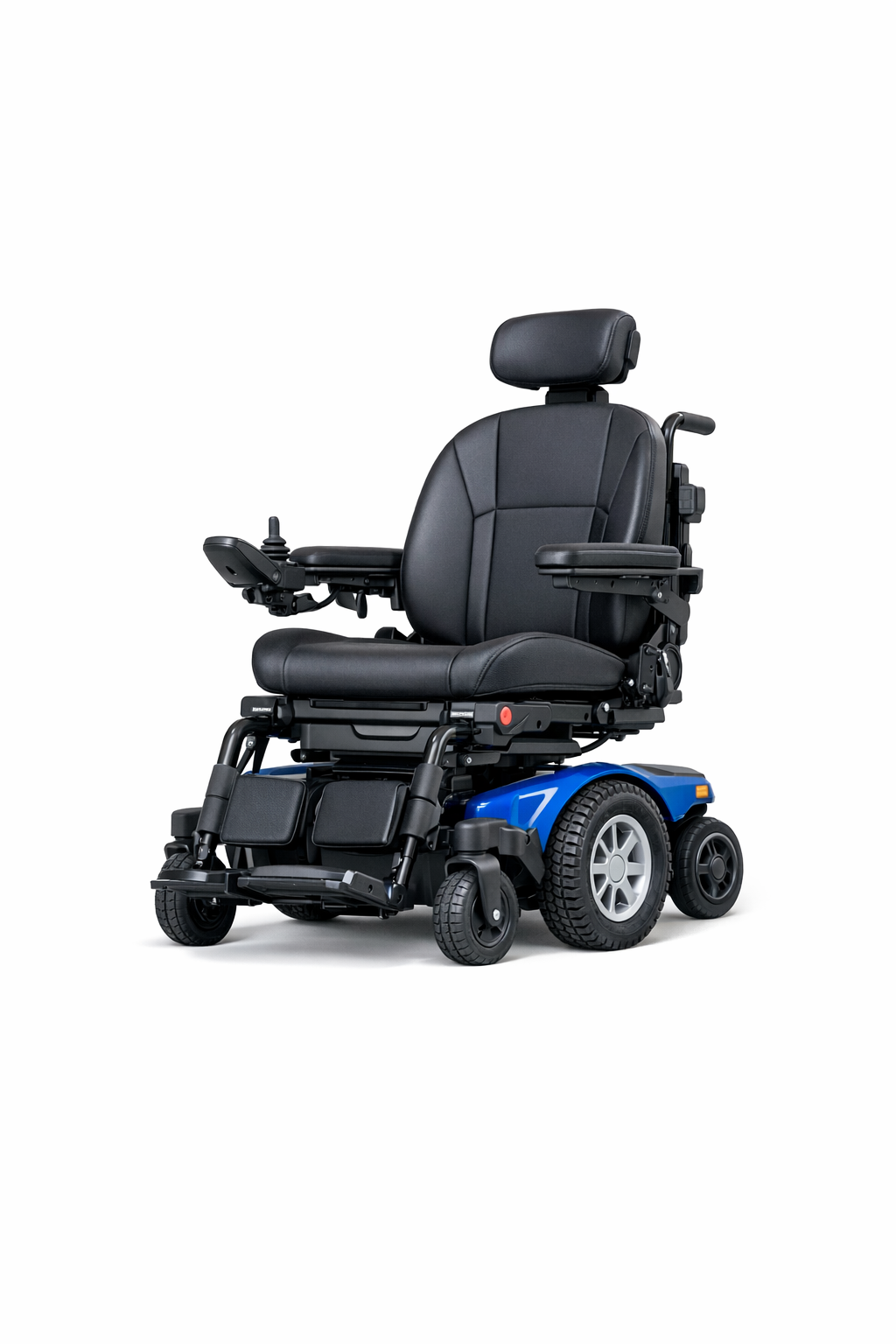
Modern Power Chair Donations

Donating Medical Supplies

34 Years of Delivering Compliant and Unchallenged Donation Appraisals